
20 October 2019

18 October 2018
Rate these speeches!
Wijsen sisters
Greta Thunberg
Olly Alexander
Malala
Mark Robinson
Winston Churchill (Gary Oldman)
Alasdair Harris
Alexandria Ocasio-Cortez
Greta Thunberg
Olly Alexander
Malala
Mark Robinson
Winston Churchill (Gary Oldman)
Alasdair Harris
Alexandria Ocasio-Cortez
What, for you, makes these "good" or "bad" speeches?
Think about who, what, where, when, how, why:
- The speaker (who is she/he, what is your opinion of her/him?)
- Contents (what is said, do you approve?)
- Context (who is the speaker talking to, when and where?)
- Speech delivery (how well is the message conveyed)?
- What is the aim of the speech?

21 May 2018

4 March 2018
Some great speeches...

Obama
Great speeches were made by:
- (Shakespeare’s) Marc Anthony (Caesar’s funeral oration)
- (Shakespeare’s) Henry V (St Crispin’s Day speech before the battle of Agincourt)
- Lincoln (Gettysburg Address)
- Churchill ("We shall never surrender")
- JFK (“We choose to go to the moon”)
- Obama (2004 keynote speech)
- Hilary Benn (“We must now confront this evil”)
- Malala Yousafzi ("Education first")
To do:
- Find out about the lives and times of these great orators.
- When, where, to whom and why were the above speeches given?
- What, according to you, makes these spreeches "great"?
How to give a great speech...


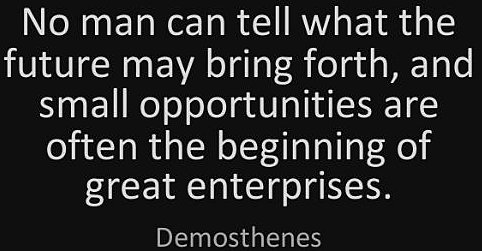
Demosthenes (384 BC -
322 BC) was a prominent Greek statesman and orator of ancient Athens, generally
considered the greatest of the Greek orators. When Cicero had finished
speaking, the people said: "How well he spoke!" When Demosthenes had
finished speaking, they said: "Let us march!"

Here are things to keep in mind when preparing to give your speech:
- Remember, the aim of your speech is: to make the audience aware of something important, to convince it through proof (facts, figures) and coherent arguments to change its way of seeing things. It is also to motivate (inspire) the audience to think and act differently or to do something as a consequence of your speech. Will your speech text and delivery enable you to do this? Will your audience care about what you have to say? Will it be memorable (what three ideas will they remember from your speech; is there one sentence that they can quote from your speech?). What emotions do you want to share with your audience?
- Really know your text (by heart is best)! Short, simple speeches are easier to remember and have a greater impact simply because they are easier to listen to. You will impress more by NOT having a piece of paper (a reminder) because your stage presence will be greater (it is much better to look at the audience than at a piece of paper!).
- If you use a reminder, place it on the lectern (avoid walking around with a piece of paper in your hands!).
- Dress smart! It will signal to the members of the audience that you respect them (also: do NOT carry a smartphone on stage or put it in your pocket!).
- Do breathing and stretching exercises just before going on stage. Do not panic: your audience is (usually) FRIENDLY and willing to listen to you!
- The way you walk on stage should show determination (energy!).
- Posture/stance: stand tall!
- Do not greet the audience or say who you are!
- Wait for silence.
- Smile at the audience before you are about to start (if it is appropriate), count to three whilst breathing in deeply, and then commence!
- Your first sentence should grab the audience’s attention!
- Address everyone in the audience (not just the Jury if it's a public speaking competition).
- Speak LOUD (can the people at the back here you?) and, when necessary, LOUDER (without straining your voice).
- Talk very CLEARLY (work on your diction, i.e. speak so that each word is clearly heard and understood: pronounce e-ve-ry syl-la-ble)!
- Intonation (how, at the end of a sentence, the voice rises, falls, or falls and rises) needs to be mastered.
- Use the punctuation marks in your text to help you phrase (and breathe!) correctly (count “1” for a comma, “3” for a full stop).
- Emphasise important words in a sentence (this is essential in making yourself understood in English)!
- Try (if possible) to improve the quality of your voice (if it is too “nasal”, “gravelly”, “breathy”, “creaky”, “thin”, whatever...).
- Vary pitch when necessary (a voice that is constantly high-pitched or low-pitched can become irritating).
- Generally, speaking “low” conveys authority.
- Avoid at all cost a monotonous voice (i.e. one that does not vary in pitch or cadence)!
- Speak at the right pace for your audience (always give the audience time to understand what you are saying). If you speak too fast you will sound nervous and the audience will “lose the thread”. Speed up a little if there is something urgent to say (you can then repeat the sentence more slowly).
- What tone (“friendly”, “calm”, “exasperated”, etc.) will be most effective in conveying (a part of) your message?
- The overall tone of your speech should be quite serious.
- If you use a personal anecdote as an “introduction” (an excellent way to get your audience’s attention and to establish a degree of complicity), make it short.
- Explain your purpose in giving your speech (why your topic is relevant), and indicate how you will talk about your topic (for example: “I have three questions: (…). And now, I am going to answer the first question…”).
- Move quickly into the body of the speech to keep your audience interested.
- Be sure you respect the timing; the shorter and punchier the speech, the better!
- Do NOT “recite by heart” or read out you reminder or your text!
- Use your reminder sparingly. Only look at it from time to time or, better still, look at it as a way to signal to the audience that you are about to present a new idea (as you read to yourself there will be a short pause, which is good).
- Quick pauses to give the audience time to take in what you have just said are good (a pause for dramatic effect too).
- It is the main points that you need to get across (repeat and emphasise these).
- Use signposts like: “The essential point is…” or “What you must not forget is…” or “Let me say that again, it’s important…” or “Now for my next point…”
- Saying something spontaneously (that is unprepared, impromptu, improvised) can be very effective (think of Martin Luther King’s “I have a dream”!).
- It is not “bad” if you hesitate a little or get lost (but just once!) in your argument.
- If you enlist audience participation (“Show of hands if…”) do so just once or twice (at the start and/or at the end of your speech is probably best).
- If you do ask a direct question of the audience, make it quick, and only ask it if the answer helps you prove a point (make the question very simple to understand, like: “Do you think there will be a war between the USA and North Korea before 2020? If you think yes, there will be a war between the USA and North Korea, please put your hand up!”).
- Look at ALL the members of the audience (sweep your gaze quite slowly over the audience and from time get eye contact with one person, but briefly)!
- Speak with authority but stay humble (it’s your ideas that count!).
- Do not “talk over the heads” of your audience or be condescending.
- Don’t be too self-confident or too “friendly”!
- Be sincere. If you obviously believe in what you say, the audience will want to believe what you say too.
- Smile at the right moments!
- Never yell or curse!
- Do NOT act as if you were intimidated by the situation (there are no “sympathy points”!).
- Do not be “traumatized” if you “mess it up” (you’re only human and it is not the end of the world)! You must complete your speech!
- Do not use silly props.
- Wit, yes, but used sparingly (avoid trying to be “funny” and sarcasm is a no-no)!
- Use lyrical sentences and an impassioned tone if and when appropriate (be conscious of your audience’s degree of receptivity).
- You should use a more “conversational” style when telling a personal anecdote.
- “Acting” (pretending to be someone else at some point in your speech) can be effective (if it’s done well!).
- Do not move about on stage (except in a deliberate way for a particular purpose); it distracts the audience from what you are saying.
- Gestures need to be few, clearly understood, and deliberate.
- Associate hand signs to particular words or sentences or emotions (repeat the hand signs whenever you repeat the particular words).
- Note that hands down with open palms is a way of “appealing” to your audience (use sparingly), hands up in front of you with palms open shows rejection of the audience (not good!), and pointing a finger is accusatory (avoid!).
- Incessantly moving your hands and arms about indicates you are nervous and the audience will be distracted.
- Facial expressions have to correspond to what you are saying (to the emotions you want to convey).
- Do not say “thank you!” after your last sentence.
- It should be obvious you have finished (do not say "that's it" or "I've finished"!)
- Practice giving your speech on friends as many times as necessary (ask yourself: do I connect with them, is the information clear, do they lose the thread of my argument or description, do they get bored, do I have trouble speaking clearly and/or emphatically, do I breathe in enough before the start of a sentence, do I stay within my time limit, what do I have to work on, etc.?).
21 January 2018
How to write a good speech text!

> A speech is NOT an "exposé"! You give an "exposé" to simply inform an audience, whereas you give a speech to both inform and convince an audience (that what you say is right, true, good)!
> You need to understand the difference between writing to be read and writing to be heard. Writing to be heard is performed writing, and it is characterized by texts that are shorter than formal written texts and which use more simple syntax, use careful and systematic “signpost language” (explicit transitions that help listeners keep on track, by purposeful repetition, and by vivid and lively diction).
> Adapt
your (written and oral) style to your subject matter and to the audience (aim
for plain if you want to instruct, and more florid if you want to move or
inspire your audience).
> One (two or three) strong argument(s) or idea(s) is (are) better than many (superficial) ideas!
> Alliteration used sparingly is good.
> The first sentence/introduction (and how you say it) is all-important: it sets the tone of your speech.
> Call the audience to action based on their new knowledge and understanding (be specific and realistic).
> Remember to make use of the rhetorical devices of Ethos, Pathos and Logos when writing your speech text!

11 January 2017


31 December 2016

24 August 2016

14 February 2016



12 February 2016

11 February 2016
Obama

2004 key note address NDC
2008 victory speech
“If there is anyone out there who still doubts America is a place where all things are possible, who still wonders if the dream of our founders is alive in our time, who still questions the power of our democracy – tonight is your answer.”

Subscribe to:
Posts (Atom)